
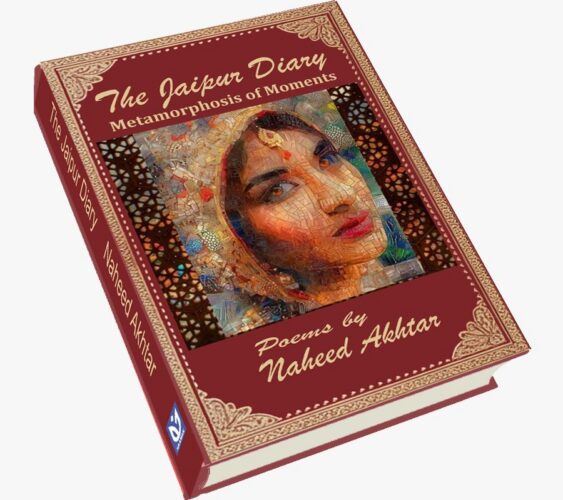
 Naheed Akhtar
“One is not born, but rather becomes, a woman.”
— The Second Sex (1949)
The equilibrium of the entire existence depends not on the suppression of feminine sensibility, but on the charge, women take for themselves in sustaining the survival of natural phenomena. The weight of their desires, if they acknowledge them, can be unburdened only through their will and perseverance. They can free themselves from the societal aspirations that are nothing but shackles to nail their feet from walking on the paths of self-respect.
They need to know that they hold a position. They need to understand where and how they are located within existence. They need to understand their responsibilities being one of the two parents who equally have the right in upbringing their children. Their identity is as essential as that of anyone or anything on this planet earth. They complete the existence. They form existence. Their physical absence immobilizes one hemisphere of this planet, relinquishing the other half to unearth its pace.
If subjugation is the ultimate fate of feminine freedom, and they embrace it without translating its consequences, then the perceived liberty of men too falls at stake. When one shoulder is encumbered, the other cannot remain unaffected; and when one eye weeps, the other too is inevitably affected. There are many similar occurrences in nature where two elements are designed to complement each other. This is an entirely unnatural state of affairs if one shoulder, one eye, or anything that naturally exists in pairs proves to be complete without the other. Such is the condition of men and women who are bound to co-exist. The mutual peace is directly proportional to the happiness they are determined to develop in the family.
The dependency story of women cannot ensure eternity of relations among family members. As soon as an ideal image of women becomes a commonplace and women start practicing the same, without translating its consequences, they harm themselves along with others. This is the situation where the following quote of Mary Wollstonecraft can be aligned with my perspective: “I do not wish women to have power over men; but over themselves.” The main purpose of women empowerment does not lie in having supremacy over others, but themselves. They, through their weakness, become a source of disrupting balance in living of people on earth. It is important to realize that the duty of women cannot be any less than men in quickening pace of life on earth. The process of living must be managed both by men and women. A balanced family is a family which eats balanced food containing necessary nutrients.
Suppression and subjugation are very powerful terms, and they are the subjects to be dealt with sensitivity by every individual, like the subjects of tradition, culture, philosophy, psychology, finances, etc., with the same burden. When I use these terms (suppression and subjugation) here, I bear the sense of a mandate to bring them into connection with women without confusing them with the power men possess. Rather, I dare say, that these terms indeed become tangible due to the fragility women charaterize.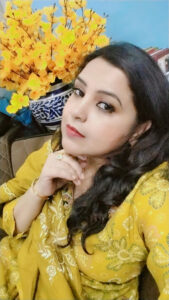
Women bear their children in their womb and give them birth, not to escape from manifesting their emotional growth in the right direction. They have to be omnipresent and omnipotent for their children, for which they have to be capable of holding themselves whole. They cannot protect and lead their children with their scattered identity within the family. They are bound to transform their childhood into adulthood by infusing strength into them to lead their life smoothly and successfully.
Here, in the context of my journey, I would like to make it clear that these terms are specific to my own understanding of feminine life. The long years of this journey have led me to defend my charge by stating that women have an equal birthright to treasure and enjoy the blessings of life that God has given them. There is a need to get aware of it. Here I would like to bring an instance from Kamala das from one of her poetry works ‘An Introduction’, where she makes the following declaration, “I too call myself I”. This proclamation focuses on the rights of women to be different, expressive and individual even while breaking the boundaries of their gender roles. As an individual, the process of moving from silence to expression was mainly about discovering the identity as opposed to being an expression against anyone or anything.
“I am sinner, I am saint. I am the beloved and the betrayed. I have no joys which are not yours, no aches which are not yours. I too call myself I.”
— Kamala Das
As I have now gained reputation for the strength that I possess, it did not strike me early in my life. How much I had been carrying in myself all along, was a mystery. Similar to most women out there, I equated silence to strength and self-denial to a sense of duty. It has taken me a lot of time to recognise the need for preserving my own sensibility in order to be able to resist, which eventually contributed to the wellbeing of my family and children. It is this very message that I am trying to convey how women are unable to reconcile between their duties and their sensibilities and how submission makes the hierarchical structure thrive. During the period when I started changing as a person, the transformation was taking place gradually and periodically. I experienced the power women can wield. Enlightenment had always been present in my life and around me because the revelation had already been made inside my mind. With the help of dissolving the lumps in my throat, I was learning to walk after crawling and fly after running.
When the vibrations of the heart
Beat at the same frequency,
Attuned to its yearning for the elusive;
Tranquility befriends the eyes.
—Naheed Akhtar
The silence that had captured me resigned, and I regained my voice. Every trace of chaos around me was devoured by the singular decision not to give up on my desires. It was that silence alone that refused to prolong itself, making me understand how dependent I was on my voice. At some point, my stuck voice was retained in words that had turned into an alien language that nobody was able to decipher, me included. Such was the sign of a language waiting to recover its meaning and accessibility. Only through the act of voicing, I finally managed to regain my connection with myself as a woman. At that time, the image of a mother became apparent to me, not as a mask which I needed to wear in order to fulfill my societal roles, but as a vulnerable and powerful human being. The idea came to me that vulnerability and power are not mutually exclusive concepts, rather, they complement one another. Tenderness and injuries were responsible for the development of my character.
Moreover, I understood the impact of loving myself. Each gift I gave myself proved that I needed to respect moments of solitude and reward myself for my own accomplishments. Leaving my internal battle aside, I never forgot about the lark inside me flying up there. Nature aught me the most valuable lesson in life. Just as the Earth continues to balance herself with the continued battle between two opposite forces. Centrifugal and Centripetal. I too learned to balance myself with the two opposites within me. As a Maman, a symbol of both strength and fragility. This balance was required to keep on sustaining myself.
It was not something that stayed within the confines of my internal being but began manifesting itself in two spheres that defined my public persona, teaching and poetry. Being an Assistant Professor and a doctoral research scholar of English Language Teaching, I found an opportunity to direct my energies towards development. Simultaneously, poetry became the space closest to my being where my experiences, thoughts, expressions and emotions could find their form. I authored six poetry books Phantasms of My Heart, The Earth’s Love, The Morphine, Beyond the Clouds, Let the Womb Hold and Other Poems, and The Jaipur Diary. My poetry gives me a sense of strength by the they appear in various journals and anthologies across India and abroad, and by being acknowledge. Being engaged in mushairas and literary festivals held across India, such as those at Kolkata Book Fair and Festival of Letters, has further strengthened my belief that both teaching and literature keep me connected with my elements.
Of all the accomplishments that have made my life fulfilling, there is one accomplishment that I can be proud of because it symbolizes how much I contributed to humanity and social work. I was awarded the title of Higher Distinction Honorary Doctorate (Ph.D. Honoris Causa) for my contribution to womanhood and social work, bestowed on me by Good Samaritan Theological Seminary, Nigeria. International institutions from the USA and the UK have been involved in conferring this recognition. This accolade has reinforced my love for literature.
Reflecting upon the experiences that had marked my past, I saw that my experiences in life had been about collecting all those pieces that made me who I am and creating a complete picture. Being a woman, mother, educator, academician, and poet taught me that true courage could not lie in silence, and true sacrifice should not mean the annihilation of one’s own sensibility. It came from preserving one’s sensibility in serving others. My academic success and poetry could not be divorced from my struggles, since these flowers of my life had grown out of those difficulties. There was perhaps a message that needed to be carried across through my experiences, and that message could be understood as the birthright that each woman is endowed with by God to treasure the bounties of life and thus restore its balance.
Finally, it is evident that the state of being a woman should not be perceived as a fight for domination or independence from others, but rather as a journey of attaining one’s uniqueness and self-respect. Real liberation lies in embracing oneself with respect, voice, and confidence instead of relinquishing any of one’s responsibilities. In this regard, motivated by the strength, wisdom, perseverance, and compassion, it becomes increasingly clear that the highest form of freedom is to embrace one’s unique self as God’s masterpiece.
*


 పెద్దన్న మారబత్తుల
 శివలక్ష్మి
 Chandana Alluru
 విశీ
విశీ
 సంజయ్ ఖాన్
 ముక్కామల చక్రధర్
 శ్రీరామ్ పుప్పాల
Such a touching piece! Straight from the heart! The personal and the universal mingle in a perfect harmony!
Thanks a bunch for the kind words💐
A powerful article written exceptionally well. I really liked the symbolic usage of Maman.
“When one eye weeps, the other too is inevitably affected” was one of my favourite sentences. Kudos to Naheed Akhtar for writing such a brilliant piece.
Thank you so much, Salman for reading the article. Thank you for the appreciation 😊
ایک کامیاب اور بہترین کوشش ۔
آپ کی خدمت میں بہت بہت مبارک باد پیش کرتا ہوں ۔
اللہ کرے کہ آپ کے قلم میں زور اور زیادہ ہو ۔
آپ کی اس خوبصورت تحریر کی بنیاد پر اپ کی والدہ کے حوالے سے منور رانا کا ایک شعر خلاصے کے طور پر پیش کرنا چاہتا ہوں ۔ امید کے پسند ائے ۔
*ہمارے کچھ گناہوں کی سزا بھی ساتھ چلتی ہے*
*ہم اب تنہا نہیں چلتے دوا بھی ساتھ چلتی ہے*
*ابھی زندہ ہے ماں میری مجھے کچھ بھی نہیں ہوگا*
*میں گھر سے جب نکلتا ہوں دعا بھی ساتھ چلتی ہے *
Thank you so much, Rahil Sahab. JazakAllahuKhair 🍁
As a butterfly unfolds its journey, your article unfolded layer by layer, beautifully depicting the journey of a woman…one that so many women can relate to on a deeply emotional level.
The metamorphosis of a woman in this patriarchal society reflects her remarkable strength: her ability to endure pain, rise above adversity, and ultimately emerge whole, resilient, and empowered.
Much love, Naheed. Keep exploring, keep writing, and keep shining your light upon the world. Your words have the power to inspire reflection, courage, and hope.
~Aarzoo Mehek
Huge thanks and gratitude to you, dear Ma’am, for such beautiful words. I love the way you have extracted meaning out of this article. I am pleased to say that your words inspire and encourage me to write more.
Bunches of love and regards 💓💓