
 Lopamudra Banerjee
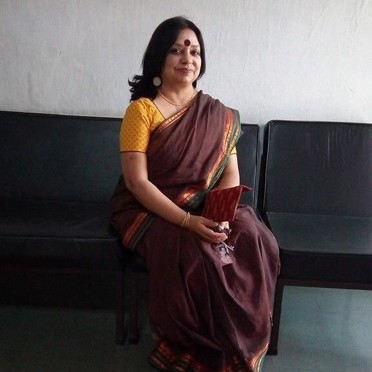
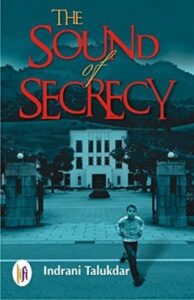
Indrani Talukdar has a master’s degree in communications’ studies from RMIT University in Melbourne (Australia). Currently employed as Consultant Editor at the Institute of Rural Management Anand (IRMA), she has worked as a journalist in India and Australia. She won First Prize at the Greater Dandenong Short Story Writing Competition in Australia as well as a Rotary Exchange Fellowship to Argentina besides penning three novels, a novelette, and a book of short stories for children, one of which was selected for publication by the Rajasthan State Board. Her poem – THE RIOT – was ranked Number 1 Star Finalist in the Voices.Net International Poetry Contest in 2012 and her short story “The dowry” figured in the long list of the 2019 OWT Short Fiction Prize. Her debut novel, WHEN THE LAMPS WERE LIT (2008) appeared as an e-book serialized by www.indianwoman.com, based in San Jose, California. Her second novel – THE SOUND OF SECRECY – was published in print by LiFi Publishers (New Delhi) in 2016, while her third novel, THE COLOUR OF POPLARS, was published by Spring Books (New Delhi) in 2019.
Indrani has been a close friend of mine from my writing circle in India and our mutual love for writing and the arts was strengthened further with my interaction with her mother, acclaimed artist Ms. Monica Talukar, who had been a source of inspiration in my life, and who had also been interviewed by me during her visit to Texas some years back. In this heart-to-heart conversation, we converse about her literary and academic journey, and how her rich legacy of the arts is kept alive through her writing and her other pursuits, after her mother’s demise.
Lopa Banerjee: Welcome aboard, Indrani! From our association which has grown manifold over the years, I can’t tell you how happy and honored I feel, to feature you in this series of interviews of trailblazers and changemakers of our society.
While going through the contents of your books/novels, and also knowing of your proud lineage in the humanities and the arts, it is no wonder that you flourished so much in your pursuits in the creative arts. Your mother Ms. Monica Talukdar, a renowned painter and artist of Dehra Doon who is considered the doyenne among the Uttarakhand artists and your father, a renowned geologist of his times, were two strong pillars in your life with their unique, disparate worlds, yet you seem to inculcate a lot of their ethos and values about the earth and human life, culture from them. How would you describe the strong legacy that you and your other siblings inherited from your incredibly accomplished parents?
Indrani Talukdar: Thanks Lopa, for such a thumping welcome! To me, legacy has always been more than just credibility or accomplishments — it’s about how we view the world.
I inherited a deep appreciation for beauty from my mother — not only in art but also in the little things of everyday life. She had a special knack for finding beauty in mundane, everyday things: a cracked wall, a drifting cloud, the gushing rains lashing the hillsides, and the quiet that followed. Growing up around her was like being in a world where color, texture, and emotion were always being turned into something meaningful. She demonstrated to her children that art is more than just decoration; it is a form of testimony.
From my father, I picked up a unique yet strong sensibility — discipline, curiosity, and a deep appreciation for the earth. As a geologist, he worked with time in epochs and sediments. His perspective was practical and based on experience, but also had a thoughtful, reflective side. He taught us the importance of being thorough, of being curious, and of always looking beyond the surface to discover what lies beneath.
We received a wonderful blend of intuition and structure — a mix of imagination and analysis.
My siblings and I were lucky to grow up in a home where conversations flowed easily between science and aesthetics, between the material and the metaphysical. There was never a ranking of subjects; there was just a sense of wonder. That has really stuck with me — in my writing, in my editorial work, and in how I approach life. If I carry on their legacy in any way, it might be in my efforts to connect these worlds — to write with heartfelt emotion yet honest intellect, and to stay grounded while also reaching out.
Lopa: How were your formative years shaped in the idyllic town of Dehra Dun and the picturesque Doon valley, India? Did the natural surroundings, the landscape and the people of the region and their culture have a strong impact on your persona when you started to pen your stories?
Indrani: Dehra Dun provided less of a traditional upbringing and more of a gradual introduction to the changing seasons, light, and quiet. Doon valley back then had this laid-back vibe that felt timeless. During winters, the mornings would come in with a soft mist rolling down from the hills, and the evenings would often blend into the lovely smell of moist earth and litchi orchards. I remember sitting by the heater and listening to my father – an enthusiastic trekker – regale us with stories of his adventures up in the mountains.
The mountains weren’t just a pretty sight; they felt like they were there with us — strong, observant, almost like they were looking out for us. Being nestled between the Shivaliks and the Himalayas really makes you feel the vastness of everything around you, almost without even realizing it. As you grow up, you start to notice just how small you are, and that sense of humility kind of seeps into you over time. Nature wasn’t simply beauty or recreation, it made its presence felt with a dash of boldness. The monsoon rains didn’t just inundate our lawns and streets; they also sparked creativity in our minds. If winters had a way of being both biting and cozy, summers felt like they went on forever, slow and easy.
You know, I really feel like my sensitivity to mood, atmosphere, and the emotional vibe of a story started back then. But just as important were the people — the soft rhythms of Garhwali juxtaposed with the more aggressive cadences of Hindi and English. The blended culture of a town brought together institutions, army households, artists, scientists, and long-established lineages. It was a spot where stories were shared by word of mouth — passed along by domestic workers, neighbors, teachers, and relatives. I figured out pretty quickly that every home had its own unique story to tell. When I started writing, I noticed that landscape isn’t just about the setting. It influences how we behave. It also influences how we remember things. Even when I talk about cities or broken relationships, there’s always that valley in the background — vast, calm, filled with both beauty and a bit of tension. Dehra Dun brought back so many memories for me. It helped me find my rhythm. It made me think for a moment. It showed me the importance of watching and listening before I say anything — and maybe that’s where my writing really took off.
Lopa: Apart from your academic journey and your writing journey, from your memoir/nonfiction essay titled ‘Didima’ (maternal grandmother), published in the anthology ‘The Body of Memories’ that I had the privilege to edit and curate, I was intrigued to know about your marathon rivaz sessions of classical Indian music. Quoting a short excerpt from the essay: “The Hindustani pantheon of melodies corresponds to time cycles and seasons. I learned about forty-four types of Malhar-based ragas (melodies) sung exclusively during the monsoons. Also that the formidable Megh Malhar symbolized the peak of the monsoons, and that Lord Ganesha, the obstacle-expunging deity of the Hindus, favoured Raga Hamsadhwani, a Carnatic import.” How did classical music become part of your life and identity and how is your association with it now?
Indrani: Most of my formative years were spent in the company of music, particularly classical pieces. I’ve heard from members of my family that shortly after I was born, my mother would put me in my crib to help me sleep. That was when my father turned on Beethoven or Mozart on our ancient gramophone, much to my mother’s consternation. But my father was adamant. “Let the music seep into her ears,” he would advise her. I spent my youth practicing Indian classical music and dance. At the same time, I was exposed to not just Hindustani music, but also Carnatic and Western classical traditions. My mother, an artist, did her best to teach me how to sketch, but I was a dismal learner! As a kid, I was sometimes irritated when I was forced to attend music school because, like most children, I just wanted to play with my friends. My mother never understood why somebody would refuse to learn something as sublime as music. She would assure me that eventually I’d be grateful to her for insisting on those courses. She was correct. I am.
Over the years, I gained considerable insights into the remarkable richness of Indian classical music — its close connection with time, season, and emotion. I pursued Hindustani classical music for my undergraduate studies, while many of my friends chose science or commerce. Some even mocked my decision, but I remained unfazed. The practice of riyaz instilled in me a sense of patience and attentiveness, traits that later proved to be just as vital in my writing journey.
Lopa: Your mother Monica Talukdar was a celebrated painter with a huge repertoire of her creations. What impact did her artistic sensibilities have on you since your formative years? Did you learn art from her? How did your appreciation for the arts take shape in her presence?
Indrani: Growing up with my mother meant experiencing an environment where art was not something remote or formal — it was just an integral part of daily life. Our home constantly smelt of paint and turpentine. My mother had been a student of the veteran artist Sukhbir Sanghal. After marriage, she attended the Kala Kendra art school in Dehradun as a student of the Shantiniketan artist, Dwijen Sen. My father constructed a studio for her where would spend hours fully engrossed in the process of translating her observations and emotions onto the canvas.
It was she who taught me how to look at compositions from an artist’s standpoint, something that has stayed with me. From her, I discovered that art starts with careful observation. She possessed a remarkable talent for perceiving delicate changes in light, color, and atmosphere within the natural world, inspiring us to observe our environment with greater attention. Even ordinary scenes — a cluster of trees, a stretch of sky, or the changing colors of the hills — could transform into subjects of contemplation through her perspective. She attempted to teach me how to draw, but I must admit that I was a disappointment! My sister, though, turned out to be a chip off the old block.
My abilities are evidently suited to different pursuits. What I gained from her was something potentially more lasting than mere technique — a sensitivity to aesthetics and an innate respect for the creative journey. Being in her presence also revealed to me that artistic endeavors demand a blend of discipline and solitude. Observing her paint, frequently in utter silence, I started to realize that the act of creation involves as much patience and introspection as it does inspiration. Even though I ultimately conveyed my thoughts through words instead of colors, I feel that her impact is profoundly ingrained in my writing. In numerous respects, I aim to create with words — to conjure images, textures, and feelings that remain in the reader’s consciousness, much like a piece of art.
 Lopa: From the field of journalism and communications that was part of your academic journey, how did you foray into creative writing (short stories, novels etc.)? In other words, how do you envision your journey of being a journalist in both India and Australia and also a published author and award-winning short story writer in the Indian subcontinent?
Indrani: It wasn’t so much a break from journalism as it was a logical continuation of it. My training as a journalist has instilled in me a keen eye for detail, a ear for nuanced speech, and a curiosity for the world around me. I had the opportunity to cover a broad range of narratives while reporting in India and Australia. Some were uplifting, others were disturbing, but they were all very human.
Journalism has its limits. Brevity, factual precision, and distance from the subject are essential. I wanted to investigate the emotional and psychological aspects often overlooked in reportage. Creative writing provided that opportunity.
Short stories and novels provided access to characters’ inner lives, revealing motivations, silences, and contradictions that journalism often overlooks. Fiction serves as a means to engage with reality, utilizing imagination and empathy to explore truth rather than dismiss it.
One other thing that my time in Australia did was widen my horizons. Experiencing a different cultural context enhanced my understanding of identity, belonging, and displacement, which frequently appear in my writing.
My journalism and fiction work are complementary, not separate. Journalism taught me observation and clear expression; creative writing provided freedom to explore the human condition. Each has influenced my storytelling voice uniquely.
Lopa: You have won a Rotary Exchange Fellowship to Argentina in 1998 and then, while living in Melbourne, Australia for six years (1999-2005), you have written for publications like India Abroad, Indian Link, and India Empire. Also, it was in Melbourne that you won First Prize at the Greater Dandenong Short Story Writing Competition (2003). What was the short story and how was the experience of that competition, and how do you think your immigrant experiences enriched and shaped your writing at that period of time?
Indrani: ‘The Riot’ was the title of the 2003 Greater Dandenong Short Story Writing Competition winner. The narrative drew inspiration from the tragic occurrences of the 1984 anti-Sikh riots; yet it emphasized not merely the violence, but rather a remarkable act of bravery and kindness. It illustrated how a Sikh gentleman, whose life was at risk during those tumultuous times, was offered shelter and protection by a Hindu family. I wanted to emphasize the subtle bravery that frequently remains in the shadows during chaotic times — the natural tendency of everyday individuals to support each other in the face of fear.
Earning first place in the Melbourne competition was a tremendous boost. Living far from home at that time, reinforced my belief that narratives grounded in the Indian experience can still connect with readers in diverse cultural contexts. It bolstered my confidence in taking a more serious approach to fiction.
My time in Australia was both personally and creatively fulfilling. Being an immigrant really enhances your ability to notice the world around you. People start to notice more about their identity, sense of belonging, and the memories tied to their culture. Concurrently, distance frequently renders one’s own country and its intricacies more apparent. 
Lopa: Among all your published novels, I have had the privilege to read ‘The Sound of Secrecy’ (Lifi publications) and ‘The Colour of Poplars’ (Spring Books, 2023). The novel ‘Colour of Poplars’ documents the journey and the travails encountered by an artist who lives in a rural area in India. As she immerses herself in her art, this woman becomes aware of peculiar occurrences happening in her village. Despite this, she remains steadfast in her decision to remain in her rustic surroundings. While conversing with you, I got to know that this novel was inspired by your mother Monica Talukdar’s artistic life that she spent in the hills of Uttarakhand. Can you tell the readers how you were inspired to write fiction inspired by her journey?
Indrani: Absolutely! ‘The Colour of Poplars’ draws a lot from my mother’s experiences as an artist in the hills of Uttarakhand, even though the novel is ultimately a fictional piece.
My mother shared a remarkable bond with the landscape that surrounded her. She enjoyed taking drives through the countryside, frequently heading out solo in her small car to discover the hills and valleys surrounding Dehra Doon. Whenever she stumbled upon a scene that sparked her imagination—a grove of trees, a peaceful glade, or the dancing light on the nearby hills—she would pause, pull out her sketchbook, and start to draw. For her, art wasn’t just something that happened in a studio; it was a way to connect with the vibrant world around her.
She found even places like the Tibetan monastery in the region to be quite fascinating. The prayer flags, the architecture, and the serenity of the place all inspired her sketches and paintings. Seeing her work in those environments really stuck with me as a kid. I noticed just how deeply she could dive into the process of creating.
As I started writing ‘The Colour of Poplars’, I found that many of those early impressions had lingered with me all along. The concept of an artist deciding to stay grounded in a rural setting, finding inspiration in its beauty while also recognizing its underlying tensions, felt very familiar to me. I had seen a bit of that artistic solitude and commitment reflected in my mother’s life.
Sure, the character in the novel isn’t my mother, and the narrative definitely ventures into the realm of fiction. However, the essence of artistic dedication—the subtle bravery of opting for art and solitude instead of convenience—was greatly influenced by her. The novel turned out to be more than just a story about an artist’s life; it also served, maybe without my realizing it, as a tribute to the environment I was raised in and the example she provided for me.
Lopa: While writing the novel ‘Colour of Poplars’, delving into the life of the artist (the main protagonist) and also the rural life around her, especially the lives of the women surrounding her and the dark secrets hovering around them, which is an integral part of the plot, did all of this come to you organically as an author? What insights did you derive from writing and publishing this novel?
Indrani: As I was writing The Colour of Poplars, many elements came together quite naturally, especially the social realities that the protagonist faces. The main character is an artist who is fully immersed in her work and the beauty of the landscape around her, yet she can’t help but be influenced by the lives of the people living in that very same environment.
My understanding of bride trafficking started with a deeply personal experience. When I was in my teens, a young maid from Bengal started working at our home in Dehradun. During our chat, she shared that she had journeyed all the way there in search of her husband. After she couldn’t find him, she expressed her desire to head back home. It was at that moment that the relatives of the husband she had been searching for told her directly that she had actually been “sold”. That revelation really stuck with me for a long time.
That incident made me aware of a troubling issue that’s happening in various areas of North India, where women from less affluent regions are trafficked or forced into marriages far from their homes. As I started writing the novel, those memories came flooding back, and I felt a strong urge to incorporate this hidden reality into the story.
Writing the book led me to think about the contrasts that often come with rural life: the peacefulness of the natural scenery on one side, and the intricate, sometimes challenging human stories that play out within it on the other. I aimed for readers to see through the protagonist’s eyes, experiencing both the beauty that sparks creativity and the darker elements that need to be acknowledged.
While writing the novel, I realized that fiction has a unique ability to shed light on social truths in ways that plain reporting often misses. By placing these realities within a story and through a character’s perspective, the aim is for readers to connect with the issue on both an intellectual and emotional level.
Lopa: The previous novel of yours, ‘Sound of Secrecy’ is yet another very engrossing and compelling read in which you depict the story of Oakwood Boys School in India, the mysterious disappearances that occur, the disappearance of the art teacher and several immigrant boys which is at the core of the story. The uniqueness in the plot and the narrative was that you infused a musical theme and lyrical chapter titles, which perhaps stemmed from your background in classical music. Can you tell us about the inspiration behind this book and your journey with it?
Indrani: “The Sound of Secrecy” was one of the most challenging novels for me to write since it was inspired by true-life events at a boys’ school. What resonated with me the most was not only the mystery of the disappearances – disappearances of the teachers who complained as well as a victim – but also the extremely disturbing reality that the truth remained unknown and the offender was never brought to justice.
At its heart, the book was an exploration of the feeling of incompleteness, of unresolved questions. I wanted to investigate not just the mystery itself, but also the climate of quiet and anxiety that often surround such institutions, where appearances are frequently meticulously kept even while something considerably more worrisome lurks under the surface.
The residential school environment enabled me to investigate the vulnerabilities of young boys, especially immigrant children who may have already felt displaced. Their solitude, craving for belonging, and confidence in authoritative institutions—all played major roles in the story.
The musical and lyrical elements in the book came together quite naturally. For me, music has always served as a means to express what words alone can’t convey. In structuring the chapters more lyrically, I aimed to create a counterpoint to the theme’s darkness—introducing rhythm and reflection into what is otherwise a tense and unsettling narrative.
Lopa: ‘The Sonata of Secrets’ is your other fictional work where you write a murder mystery with two sisters as protagonists and where music is inherently embedded in the theme of the book. In your other two fictional works, ‘The Magic Ring’ and ‘Turning the Table’, your themes are based more on socially relevant subjects, including the rampant culture of bullying and also the menacing reality of forced child marriages which disrupt young lives, both of which are extremely thought-provoking subjects for a novelist with social awareness. I am curious to know more about the themes, the plots and your treatment of the storyline/plot in these books.
Indrani: These books came from various creative sparks, yet they all share a common thread: my fascination with human relationships and the social realities that influence them.
The Sonata of Secrets is primarily a murder mystery, but at its heart, it also explores themes of identity and belonging. The story centers on two sisters who have different mothers but share the same father. Growing up in a household that society often labels as “tainted” or “disreputable” can really weigh on a person emotionally. The story delves into how this kind of stigma can shape one’s sense of self. Music plays a significant role in the novel, acting as a parallel narrative that mirrors the emotional tensions and hidden histories among the characters.
On the other hand, The Magic Ring is a delightful collection of short stories aimed at children. I aimed to craft imaginative and engaging stories that also softly introduce young readers to important values like empathy, courage, and kindness. Writing for children demands a unique approach—embracing simplicity, clarity, and a touch of wonder. Yet, it can be incredibly fulfilling.
Turning the Table tackles more urgent social issues, particularly child marriage. The stories delve into topics like bullying and the unsettling truth of forced child marriages, both of which still impact the lives of young people in various parts of society. I aimed to highlight these issues through fiction, hoping to spark reflection and conversation.
In all these works, I’ve aimed to blend storytelling with a keen awareness of the social contexts surrounding my characters. No matter if the story is a mystery, a children’s tale, or something that tackles social themes, my hope is that these narratives connect with readers on both an emotional and intellectual level.
Lopa: Apart from being a prolific writer and novelist, you also work in the position of a Consultant Editor for a premier management institute of India (IIRMA). Tell us a bit about your professional life at this moment. Did your experiences in communication and editing enrich your perceptions, and also broaden your horizons as a writer?
Indrani: I work as Consultant Editor at the Institute of Rural Management Anand (IRMA), a role that is both professionally engaging and intellectually enriching. Being in an academic and management-focused setting allows me to engage with a diverse array of ideas, research, and practical challenges, especially those concerning rural development and social change in India.
Working in communications and editing has definitely enhanced my clarity and precision. Editing requires a keen eye for language, structure, and the subtle details that make a piece shine. It encourages you to pay attention—not only to the words being spoken but also to the meanings that are hinted at or left unspoken. I think this has really influenced my writing, allowing me to sharpen my voice and develop a greater sense of discipline in my craft.
Engaging with scholars, practitioners, and students has really expanded my view on today’s social and economic issues. It has given me an opportunity to connect with realities that might not always be directly expressed in fiction, yet they undeniably influence how we understand the world.
Lopa: A last thought coming to my mind is: how beautifully you are carrying on with your mother’s rich legacy, with your artistic and literary sensibilities! May there be more of your ilk in our everyday world! What are your thoughts on the same? And also, are there any forthcoming writing projects (fiction, translation et al) that you would like to share with our readers?
Indrani: I really appreciate your kind words. Thank you! I view myself not so much as a person intentionally carrying on a legacy, but rather as someone who has been profoundly influenced by it. The creative atmosphere I was raised in, along with my mother’s steadfast dedication to her craft, has shaped me in ways that I often only understand when I look back on it.
Any continuity we find might just stem from a common awareness—an attentiveness to our surroundings, to the people in our lives, and to those fleeting moments that often slip by unnoticed. We all have our unique ways of interpreting and expressing that inheritance. For me, it has made its way into my writing.
I’m currently busy with both fiction and translation, and I’m excited about what’s coming next! I’ve been focusing on translations that help share stories across different languages, and I find this especially significant in a country as diverse as ours. In addition to that, I’m also diving into some new ideas in fiction, though they’re still in the early stages of development.
Right now, I view writing not so much as a final goal but as an ongoing journey—one that grows and changes with each experience, memory, and moment of reflection. If my work connects with readers in any way, I believe that’s one of the most significant ways a legacy can live on.
*


 పెద్దన్న మారబత్తుల
 Chandana Alluru
 విశీ
విశీ
 సంజయ్ ఖాన్
 ముక్కామల చక్రధర్
 శ్రీరామ్ పుప్పాల
 మౌని
మౌని
Add comment