
 Moses Tulasi
My city Hyderabad in India is one of the most Persian culture-influenced places in the world. Be it the food, language, libaz – clothing, lehja – mannerisms, akhlaq – disposition and tehzeeb – civilisation etc, Persia has had tremendous impact on our society and its social and political eco system.
It is also home to thousands of refugees and immigrants from Persian lands who made new lives, very successful ones. None of this was possible by sticking to orthodox religious models but by defying them to be precise.
Today, Hyderabad remains silent, a shameful stand taken when upto 30,000 Iranian citizens are murdered by its own theocratic government, a statistic verified by global news outlets like BBC. It seems the city has lost its voice of standing up to injustice especially of the type that is propagated in the name of religion and religious piety.
Hyderabad has the largest administrative Iranian Consulate in India in the heart of its city in Banjara Hills and there is no trace or any mobilisation of public dissent in front of the consulate or even on social media, neither at an individual level nor at a community level.
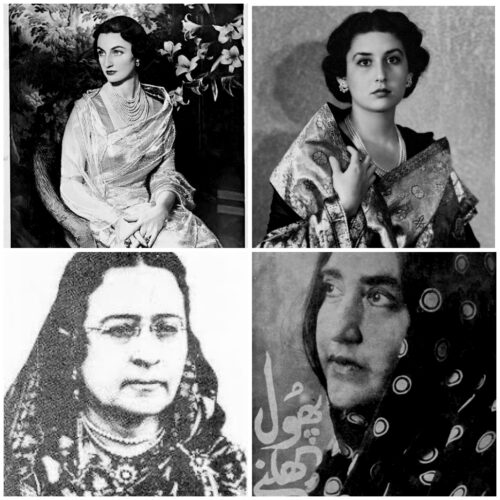
Hyderabad has had several Muslim feminists who challenged the archaic religious and patriarchal norms. Here, we remind ourselves of four such towering personalities from history across different sections of society – aristocracy, philanthropy and literature.
The Wahhabi influence from the 1960s and 1970s till date on Hyderabad unfortunately eroded the spectacular work done by feminists of their generations prior, to the extent that our own children are never taught about these iconic personalities and the courage they showed under the weight of religious dogma and stagnation of thought.
Princesses Durru Shehvar and Niloufer – Daughter and niece of the last Islamic Caliph Abdul Mejid II who went on to become the daughters-in-law of the last Nizam of Hyderabad in power, Mir Osman Ali Khan in 1931.
They were shocked to see the state of Hyderabad lacking basic facilities for women education and healthcare and instantly sprung into action in creating schools, colleges and hospitals with a focus on maternity services – which still stand tall today serving the women of the state.
They never indulged in performative virtues of Hijab and Burqa to appease their husbands or the clergy or the Nizam himself. The Nizam was in fact so impressed by their personalities that he actually took pride in being seen with them in public engagements and respected them for who they were and encouraged them in their philanthropy projects.
Sughra Humayun Mirza – Perhaps the most vocal and unapologetic voice ever to have come out of Hyderabad against false religious piety associated with – purdah system, girl child marriages, female illiteracy, polygamy and rampant divorces without alimony – that relegates large numbers of Muslim girls and middle-aged women into socially handicapped ghettos.
She met with Muhammad Ali Jinnah, the president of Muslim League before partition along with other Muslim leaders and realised that the then emerging Muslim politics had no vision towards the upliftment of socially and educationally backward Muslim girls.
She decided to do her part and started the Safdaria girls school and residential hostel in 1934 that still functions, albeit with much less glory than the past. Tens of thousands of women were saved by the institution and the social work of this trailblazer and her very supportive husband, Barrister Syed Humayun Mirza.
Wajida Tabassum – An Osmania University graduate and a fiction genre author of 27 books in Urdu, she often drew from factual events from her lifetime living in a Hyderabadi Muslim nawabi feudal society during the 1940s through the 60s.
Through her prose and short stories, she ripped open the band-aids that had been administered by hagiographic writers until then who romanticised the aristocratic life-styles of Muslim royalty and nobility. She exposed horrific social atrocities women in these societies experience including sexual exploitation and physical labour, all in the name of religious piety.
While she is celebrated by a section of the society as “bold, courageous and uninhibited”, it is these virtues that she is also called “crass, vulgar and shameless” for, by another section. Her writings had been made into TV serials like UTTRAN and movies.
Today, we lament the loss of Hyderabad’s Durru Shehvars and Nilofers. We lost our Sugha Humayun Mirzas and Wajida Tabassums to time, to the blind, ugly, uncritical purdah behind which religious fanaticism and fascism thrives.
This is what happens to the legacy of bold Muslim women who are original-thinkers when they stand up to religious bigotry. It is shameful and we lament our society’s stagnation of thought in favour of religious piety.
*


 పెద్దన్న మారబత్తుల
 సుజాత వేల్పూరి
 మునిసురేష్ పిళ్లె
 శాంతి ఈశాన్
 మానస ఎండ్లూరి
 భరత్ కనికె
 ముక్కామల చక్రధర్
The information is good in throwing light on the past glory of our CHAR SOW SHAHAR.
The language used is coming in the flow of reading.and could have been moderated a bit.