
 Akriti vigya 'Arpan'
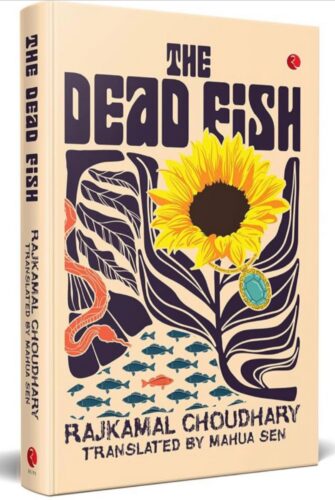
 In the world of literature, translation acts like a bridge, carrying the depths of one language to the shores of another. Mahua Sen’s English translation of Rajkamal Chaudhary’s classic Hindi novel Machhli Mari Hui (originally published in 1966) as The Dead Fish is precisely such a vital bridge. It brings a controversial, ahead-of-its-time work from mid-20th-century Hindi literature to global readers, making accessible a text that fearlessly dissects desire, identity, and the dark underbelly of urban life.
This book does more than depict longing, fractured selfhood, and the shadowy portrait of a city—it plunges so deeply into the complexities of the human psyche that readers feel themselves swept along in its current. Mahua Sen’s translation not only preserves the essence of the original but infuses it with fresh vitality, ensuring its relevance for contemporary audiences. In this review, we will discuss the original author Rajkamal Chaudhary’s achievement, praise Mahua Sen’s translational skill, and reflect on the broader significance of this translation effort—all in original language and perspective, grounded in factual details but woven with fresh, personal insight.
First, let’s talk about the original author, Rajkamal Chaudhary. He stands among those Hindi writers whose presence has always been challenging and provocative. Active in the mid-20th century, his works relentlessly push against the boundaries of conventional morality. Machhli Mari Hui remains his most controversial novel. Chaudhary’s writing carries an inherent restlessness that collides head-on with societal norms. Though from Bihar, his stories and novels frequently wander through city alleys, tangled human relationships, and the profound depths of sexuality. His style is modernist at its core: the inner world of characters often overshadows the external one.
Chaudhary deserves praise for daring to touch subjects in his era that remain taboo in many societies even today. For instance, themes of homosexuality, emotional instability, and the search for identity emerge with such boldness that it feels as though he was writing decades ahead of his time. His prose is concise, image-rich, and powerfully evocative, forcing readers to hold their breath as they turn the pages. Chaudhary’s creations introduce a rebellious voice into Hindi literature—one that centers not romantic love but the rot of desire, the melancholy of the city, and human isolation. His work is commendable because it refuses to treat literature merely as entertainment; instead, it exposes the deep fissures in society. In today’s context, as we discuss mental health, sexual diversity, and urban alienation, Chaudhary’s writing becomes a source of inspiration. He turned literature into a mirror—not one that reflects beauty, but one that reveals the grotesque truth—and that is his greatest accomplishment.
Now, let’s turn to the novel itself, Machhli Mari Hui. The story revolves around the protagonist Nirmal Padmavat, a ruthless businessman whose personal life is riddled with emotional volatility and contradictory sexuality. Set in mid-20th-century Kolkata, the city itself emerges as a character—dark, desolate, and devoid of tenderness. Here, desire is not romantic; it festers and stinks, much like the stench of a dead fish. Chaudhary digs into the depths of the human mind, where attempts at love fail, and characters become trapped in cages of loneliness. This is not just a narrative but a psychological study, portraying sexual orientation, identity dilemmas, and emotional chaos without any censorship.
Chaudhary’s language is so sharp that readers feel as though they are walking those city lanes themselves, inhaling that very decay. His work is praiseworthy for turning literature into social commentary without preaching morality. He shows how complex human desires can be and how society suppresses them. The novel was ahead of its time, challenging traditional ethics, and it remains relevant today as our world continues to grapple with these very issues. The strength of Chaudhary’s pen lies in making readers uncomfortable—and that discomfort compels reflection. His work is a milestone in Hindi literature, symbolizing modernity and rebellion.
No review of this translation would be complete without discussing Mahua Sen’s contribution. As a poet and translator, Sen has breathed new life into this Hindi classic in English. Her rendition is concise, vivid, and faithful to the original’s intensity. She has shared that she first encountered the book during her undergraduate years, and it resurfaced during lockdown conversations about Hindi literature, eventually inspiring her to undertake the translation.
Translating it was no easy task—Chaudhary’s prose is dense, pulsating, and deeply layered, making it a formidable challenge to carry into another language. Yet Sen handles it masterfully.
Her skill is admirable because she never loses the original spirit—that fire and ice, stillness and vortex, all preserved intact. Where the Hindi original has rhythm and imagery, Sen chooses English phrasing that grips the reader, forcing them to read with bated breath. For example, the city’s shadowy portrait or the rot of desire is rendered with such precision that it feels as though one is reading the original. Sen’s talent lies in transforming translation into a true bridge—one that erases distances of time and language. She conveys the author’s heartbeat, silences, and shadows to the present without distortion. This translation matters because it carries Hindi literature to a global stage, allowing non-Hindi readers to grasp Chaudhary’s genius. Sen deserves praise for her courage in tackling such an intense work; her effort elevates the art of translation, turning language from barrier to conduit.
The significance of this translation effort runs deep. First, it makes a Hindi classic available in English, expanding its reach to worldwide readers. Written in the 1960s, the book was ahead of its era, and through translation, it can now inspire new generations. It builds a literary bridge, enabling regional-language works to join global conversations. Hindi literature often remains confined by linguistic boundaries, but Sen’s work liberates it. Second, it revives controversial themes—sexuality, identity, and mental health—providing historical context in an age when we discuss LGBTQ+ rights and mental health awareness.
Translation also preserves literature: writers like Chaudhary, once sidelined for being provocative, gain new life. Sen’s endeavor is especially commendable because it began as a personal initiative—sparked by lockdown discussions—and now resonates globally. It demonstrates that translation is not just linguistic but cultural exchange. By bringing the richness of Hindi literature to the world and contributing to global literature, this effort is profoundly important. It strengthens emerging translation traditions, where women like Sen carve space in a historically male-dominated literary field.
Ultimately, it democratizes literature, ensuring every language’s voice can be heard.
In conclusion, the translation of Machhli Mari Hui as The Dead Fish is a masterpiece that illuminates Rajkamal Chaudhary’s genius through Mahua Sen’s skillful rendering. Chaudhary’s work is praiseworthy for making literature rebellious, and Sen’s translation for making that rebellion global. This effort is significant because it shatters barriers of time, language, and culture.
Readers should pick up this book—not just for entertainment, but because it forces one to think. Sen’s translational art has elevated Hindi literature to new heights, while Chaudhary’s pen has exposed raw human truths. This review is merely a glimpse; the book itself is an ocean—only by diving in can one truly grasp its depths.
The Dead Fish – ( Rupa Publications) – Mahua Sen Translation of Machhli Mari Hui by Rajkamal Chaudhary.
*


 పెద్దన్న
 దాదా హయాత్
 బాలాజీ పోతుల
 పాణిని జన్నాభట్ల
 విశీ
విశీ
 శ్రీనివాస్ గౌడ్
 కె.పి.లక్ష్మీనరసింహ
Add comment