

 Jyoti Kiran Pisipati
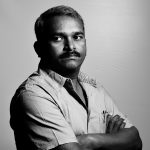
Bhagavathula Tripura Sundaramma (1935) and Bhagavatula Narasingarao (1924) started writing together under the pen name BeenaDevi in the year 1965. Hailing from families of lawyers and judges, their initiation into the world of writing came about naturally. Their first story “Raadhamma Pelli Aagipoyindi” was published in the February 1965. This husband-and-wife duo had, in the next couple of decades, published several novels, short stories, essays in leading Telugu magazines and newspapers.
Recipients of the prestigious Telugu Sahitya Akademi Award in 1972, their poignant introspection of the lives of the marginalised, unpretentious writing style, focus on unethical practices in the society, family dynamics, gender roles and social barriers, made their narratives realistic. After the death of Sri Narasingarao in 1990, Tripura Sundaramma continued writing under the same pen name and eventually published an autobiography “Beenadeviyam”. In 2011, MaNaSu Foundation, Bangalore published BeenaDevi’s collection of short stories and essays under the title BeenaDevi Samagra Rachanalu.
The year 2024 being the birth centenary year of Bhagavatula Narasingarao, the contribution of this well-acclaimed writer-couple to contemporary Telugu literature, their unique and successful literary collaboration of over three decades, needs to be celebrated.
*
It was past midday. The parched earth reeled under the scorching summer sun. Feet burnt despite the protective soles of footwear. The heat set everything and everyone aflame—sometimes mind as well as body.
“Why did you make travel plans in this heat . . . and that too, a bus journey on a hot summer afternoon?” my son Sreenu erupted like a volcano.
I sympathized with him. It was not my decision at all; when my husband makes plans—sensible or not, such as these—we follow the orders without any argument.
“Traveling during Abhijit Lagnam is very auspicious,” my husband tried to reason with us.
We had no other choice but to yield to his plans.
The three of us soon found ourselves standing under the sizzling, metal-covered bus shelter, waiting patiently for the bus to arrive. The overcrowded station looked as if our fellow travelers had quite the same belief in this so called lagnam as my husband! The heat did not deter anyone from venturing out on a day like this.
To our utter dismay, as the bus finally turned the corner and entered the stand, we realized that everyone around us was indeed waiting for the same bus! It was hard to fathom how this horde of travelers would fit into a single vehicle! It wasn’t just people—there were heaps of luggage, baskets brimming with vegetables and fruits, sacks of rice, and a jumble of boxes, all clamoring for room.
The bus approached with a cloud of dust. Whether the driver was new to his job or the brakes were loose, instead of steering towards the assigned platform, the bus zoomed past the thronging crowd and stopped about 15-20 meters away. And then what unfolded in the next several minutes was total mayhem.
Men, women and kids of all ages and sizes picked up their bags and ran towards the bus, tripping over each other and their luggage. Some rushed to throw their handkerchiefs through the windows to mark their seats. Some jostled through the crowd to reach the entrance of the bus.
“Move aside mister! My daughter’s feet are stuck! You are not letting her get on to the bus!!” screamed one young mother.
“Don’t push me. Wait till I get down, dammit,” shouted an angry man, trying with difficulty to alight from the bus.
“The bus is not going to leave so soon. Everybody will get a chance to get in,” the driver of the bus yelled at the unheeding commuters.
“What’s that heavy sack? Vegetables? There’s not enough place for people to travel and you are carrying sacks of veggies?” snapped the conductor.
Those who were regular commuters by public transport, manoeuvred through the disorderly stream of passengers and climbed in to find themselves space to sit. Though not a stranger to bus journeys, I was unsure if I would survive the throng barging into the bus that day.
Finally, with a bruise here and a tear there, I managed to scramble my way into the bus just when it started moving. The sudden jolt shoved me against a metal pole but I recovered quickly from the brief mishap as there was no time—or space— to brood over it. I looked around for an empty seat, very well knowing that it was a futile effort. At least a small space somewhere to rest by back was sufficient at that moment.
And where’s Sreenu? I hope he got into the bus!
“Ticket! Ticket!” the conductor started moving through the crammed bodies, issuing tickets.
“Should I stop the bus and look for Sreenu?” I wondered aloud.
But before I could react . . .
“Driver . . . please stop the bus!” somebody from behind shouted.
“I think my husband got off the bus,” a worried woman with shaven head was desperately looking out of the window.
“Hold on! Hold on!” the conductor called out to the driver.
The bus came to a halt.
“Oh madam, it’s you? You are disrupting the journey every now and then, and inconveniencing everyone,” an irritated conductor snapped at the woman.
“This family got into the bus in Tirupati. At every stop, her great husband gets off the bus and runs somewhere. He doesn’t even come back on time—he keeps everyone waiting. At this pace, we won’t reach the destination anytime soon. If we’re late returning from our tea break, the passengers always make such a hullabaloo,” he complained to the others.
“Oh, I am here now,” the husband of the lady entered the bus in a huff. He was carrying some liquid preciously in his hand and as he pushed through the crowd, spilt it on several people.
“Look mister. This is your last and final warning. If you get off the bus again, I am going to throw your luggage out of the window and leave you behind. Do you think this bus belongs to your in-laws?” So saying, he instructed the driver to start the bus. “Right . . . right!”
I looked around to see if Sreenu was in the bus. I wouldn’t dare to request the conductor to stop the bus. I did not want to instigate the conductor’s ire again.
And then, to my utter relief, I saw Sreenu waving from the corner of the last seat. He gestured that he had reserved a seat for me there. I quickly hustled through the crammed aisle, mumbling an apology here and a curse there and finally flopped into the seat next to Sreenu. A gush of wind blew on my face and I settled back, enjoying the fresh air at last.
Catching my breath, I craned my neck to see my immediate neighbours. The man in the seat in front of me wore a suit on a hot day like this! Maybe he was on his way to attend an interview. And then the couple on my left, next to the window—the woman’s hands were secured around a huge handbag perched on her lap. The lanky man next to her, who looked like her husband, was eating something out of a paper bag. The conductor was next to their seat dispensing tickets to them both. In front of my seat was an old woman, having difficulty unknotting the corner of her saree to remove money for the ticket. She looked like a bag of bones and her hands quivered as she made attempts untying the edge of her saree. The conductor came to her next, impatiently standing over her, watching her futile attempts.
“Hurry up old lady! Where do you need to go?”
“Mangalagiri,” she mumbled.
“Hold on! Hold on!” yelled the conductor again. The bus stopped immediately.
“This bus does not stop in Mangalagiri. You can get off here,” he ordered the old woman, the nerve on his forehead popping out threateningly.
We had already left the town 3-4 miles behind. Where would she go if she was dropped off outside the town! The other passengers stared at the scene, curious to see what was going to happen next.
“This is an express coach. It doesn’t stop in every small town and village. Get down now,” he said impatiently.
“How?!” the bewildered lady looked up at him.
“How careless can you be! Didn’t you check before getting in whether there was a stop in Mangalagiri or not? Come on. We don’t have time to waste,” he snapped at her and walked towards the door and opened it.
Flustered at the turn of events, she stood up, unsure of what do to next.
“Maybe you can just slow the bus down when we reach Mangalagiri, so she can get off there.” Sreenu, who was till then looking out of the window, suddenly raised his voice, turning towards the general direction of the conductor.
“Who is the hero behind who is giving unwanted advice?” the conductor sneered as he craned his neck to get a better view of Sreenu. “I cannot even cut the ticket for Mangalagiri; it is against the rule.”
“Then give her a ticket to Vijayawada and she will get down at Mangalagiri,” suggested Sreenu again.
Mangalagiri is a temple town a few kilometres outside the city of Vijayawada.
I looked proudly at my son for supporting the poor old woman. The conductor thought for a few seconds and instructed the driver to move.
The searing metallic body of the bus made the interiors unbearable. The oppressive heat nudged some passengers into a stupor. Even with all the windows down, the packed bus resisted any possible cross ventilation.
Then the deliberately raised voice of the driver, as stinging as the summer heat, permeated the length of the bus.
“These ladies are such a pain I tell you. They don’t know how to get into the bus properly. Neither can they get off easily without support. With one kid in their hand, a baby on their hip and one more in their belly, they royally travel on just one single ticket. And don’t get me started on the loads of luggage they carry.” He looked behind to see if his “joke” had any effect on people around him.
“Absolutely no common sense at all! What do you say mister?” He turned towards the man with unkempt hair, who was sitting on the engine next to the driver’s seat. The man was about to drift into slumber, but with the driver’s attention fixed solely on him, he sat up and nodded.
“I feel the population of women has increased everywhere. They are all over the place—on the roads, in the market, in the offices, in the busses—everywhere!” He went on without any opposition for a while.
Suddenly he stopped the bus, pushed open his side of the door and jumped on to the road. I looked out of the window. There was nothing around that area that suggested human presence. Not even an animal on the road. Then why did he stop?
“Who the hell is smoking inside the bus? The driver will not move till you douse it immediately,” shouted the conductor.
The smoker sitting behind looked around at the passengers staring at him. With a sheepish smile, he flicked the cigarette out of the window.
The driver climbed back into his seat and we moved again. Everyone let out a sigh of relief. The bus lumbered forward like a woman in the final months of pregnancy.
And then, as if a blessing from the heavens, the piercing sun was suddenly enshrouded by thick, dark clouds. A cool breeze carrying the scent of petrichor pervaded the area, lifting everyone’s spirits. Not wanting to miss the chance, birds emerged from their hideouts and glided and flitted around in search of food. The fresh breath of air invigorated everyone and the sweat-drenched and parched passengers broke into a cheer.
And the bus stopped again.
This time it was a railway crossing. There was half a mile of stranded traffic ahead of us, and commuters who reached there before us, spilled out of their vehicles and stood on the sidewalk, engrossed in conversations. Without wasting any time, everyone from our bus alighted too. Some went for a quick nature call among the nearby shrubs, some bought cold drinks to quench their thirst and a few lit their cigarettes to enjoy a few quick puffs.
Soon the oncoming train honked, warning any stray pedestrian to get out of its way. As soon as people heard the honk, except for our bus driver, everyone else quickly got into the bus. The driver stood beneath a tree, quietly enjoying the unfolding drama, his gaze fixed on the passengers who remained at his beck and call. The train huffed past the crossing, slowed, and came to a halt before us. Apparently, the engine driver had not received a clearing signal from the control room at the nearby railway station.
The hawkers around the area took advantage of this and surrounded the motorists and cyclists, making a quick buck. The place looked like a temple fair. The unexpected change of weather and the brief stop at the crossing were a welcome change for everyone. After a few minutes, the train moved again slowly. It chugged along and soon it was out of sight. In anticipation that the gates would open, the motorists waiting on both sides of the railway crossing, revved their engines, eager to move forward.
And that was the moment the woman with the big handbag chose to buy a few packs of roasted cashews.
“Hey you, gimme four packs of those cashews,” she stretched her hand out of the window to reach a young street vendor.
About twelve years old—lanky and emaciated from poor nutrition and neglect, with hair that looked as though it had never been washed—the boy suddenly sprang to life. With renewed enthusiasm, he jumped up and down a few times to reach the lady and handed her the paper parcels.
“Amma, please hurry up . . . the bus will be moving now. Gimme my money quickly,” he said with urgency in his voice.
The gates opened. Chaos descended on the place. Honking continuously, the motorists moved ahead slowly.
“Oh, let me see if I have any cash. I don’t think I have any,” she said. She put her hand into the gape of the handbag and rummaged through it, taking her own time.
The bus started moving slowly.
“Hold on! Hold on!” the boy started banging the bus, yelling at the top of his voice, scared that the woman would leave without paying him.
The driver knew which “Hold on!” he should stop the bus for. And the bus picked up pace.
“My money . . . my money . . . please hurry up madam!” the boy started running alongside the bus shouting his lungs out.
The woman continued searching her bag nonchalantly; she neither hurried to pay the boy nor made any move to return his packets. Unbothered by the fuss, her husband opened all the packets at once, dumped them into his lap, and started munching on the nuts eagerly.
“Ayyoo! The boy is running with the bus. Hope he is not going to fall,” cried somebody.
“Oh, don’t worry. It’s an everyday affair for them. They are adept at such skills. He will be fine,” another voice gave an assurance.
The woman did not look at the boy anymore. She continued mumbling to herself that she did not have the money and her husband continued popping a few nuts at a time into his mouth.
Motorists on either side of the railway line surged forward impatiently, occupying every inch of available space. With no policeman to guide the traffic, vehicles from both sides lunged ahead, each trying to outpace the one that might block its path. Drivers fixed their gaze firmly on the road, deliberately avoiding eye contact with fellow commuters—wary of provoking an argument with some irate motorist.
Threats hurled at them were easily swallowed by the din of the revving engines and honking horns, much to the relief of the violators. Commuters had mastered the art of survival on the road. A good driver knew how to claim every inch, every square of tarmac, before someone else could seize it—even if it meant flouting a benign road rule. Cyclists and pedestrians poured into the gaps in between these warring vehicles, quick to fill any fissure in the flow. The monolith moved at a pace that carved its own destination.
“Amma, hurry up…give me whatever small change you have please,” wailed the boy trying to keep up with the pace of the bus.
When he realized that the woman did not pay any heed to his earnest implorations, he leapt up and held on to the window and pleaded her to give his money.
“Hey, what are you doing? Can’t you understand? I don’t have any small change to give you!” the woman snapped back at the boy.
He continued to hang precariously on the window, the woman went on with her dispassionate mumbling ignoring his wails, and the husband continued munching on his precious snack.
The scene attracted curiosity, and the passengers looked on with bated breath, eagerly waiting for the story to unfold. Whether it was their faith that the boy would finally let go of the bus to save his own life or their “cultured” upbringing that stopped them from interfering in a business not their own, the onlookers just sat there, watching the drama.
Once out of the traffic congestion, the bus picked up speed. The driver decided to make up for lost time.
And then it happened in a split second.
An oncoming truck, trying to avoid the speeding bus, swerved toward the side where the boy was dangling. It whizzed past, leaving barely a breath of space between the hurtling vehicles.
The voice and the body were swept away. A stunned silence followed.
“Why did he take a risk? Is money more important than his precious life?”
“Stubborn rascal. He has invited his own fate!”
“Poor kid. He was destined to die like this.”
——–


 పెద్దన్న మారబత్తుల
 సుజాత వేల్పూరి
 మునిసురేష్ పిళ్లె
 శాంతి ఈశాన్
 మానస ఎండ్లూరి
 భరత్ కనికె
 ముక్కామల చక్రధర్
Add comment